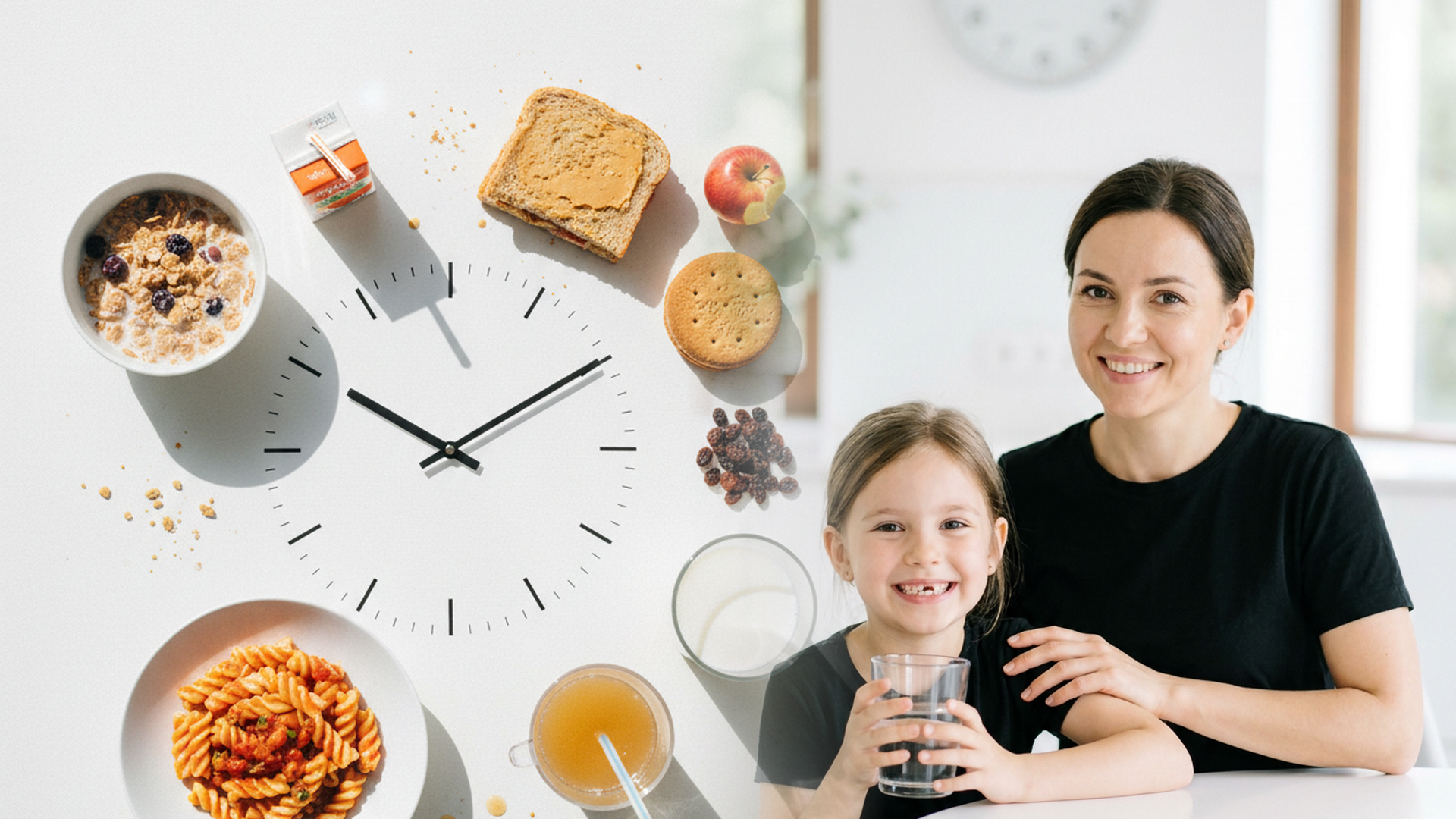
Ask most parents what causes tooth decay and they'll say sugar. That's half right, and the missing half is the useful part.
It isn't the amount of sugar. It's the number of separate times a day it turns up.
What actually happens in a child's mouth
Every time sugar arrives, the bacteria on the teeth produce acid, and that acid softens enamel for roughly twenty minutes to an hour. Saliva then neutralises it and the enamel re-hardens. That cycle is completely normal and teeth cope with it perfectly well.
The trouble is when it happens so often that the enamel never gets time to recover.
So: a chocolate bar eaten in one go is one acid attack. The same chocolate bar in a pocket, nibbled across a whole afternoon, is six or seven. Identical sugar. Wildly different outcome.
The counterintuitive consequences
Once you see it this way, some standard advice flips.
Pudding is better than snacking. Sweet things eaten with a meal ride along on an acid attack that was happening anyway. The same sweet thing an hour later is a fresh one.
A sports bottle of squash all afternoon is worse than a can of cola with lunch. Sipping keeps the mouth acidic continuously. This is one of the most common causes of decay we see in otherwise well-cared-for children.
Dried fruit isn't a free pass. Raisins and dried mango are sugar, and they're sticky sugar, which sits on the teeth far longer than something that's swallowed.
Some "healthy" snacks are the worst offenders. Fruit-and-oat bars, smoothies and flavoured yoghurts are frequent, sticky and sweet — the exact combination that causes problems.
What to do instead
Not "no sugar." That's neither realistic nor necessary, and battling over it tends to make sweet things more desirable, not less.
- Keep sweet things to mealtimes. The single highest-impact change available.
- Between meals, water or plain milk. Everything else can wait for a meal.
- If they snack, make it a savoury one. Cheese, breadsticks, plain crackers. Cheese is genuinely helpful — it raises the pH in the mouth.
- Finish, don't graze. A drink drunk is better than a drink carried around.
- Don't brush straight after anything acidic. Enamel is temporarily softened. Wait an hour, or brush before instead.
The bedtime bottle, specifically
Milk left with a baby or toddler at bedtime is worth singling out. Saliva flow drops right down during sleep, so the sugars in the milk sit against the teeth for hours with nothing washing them away. It causes a very particular and very preventable pattern of decay in the upper front teeth.
Milk at bedtime is fine. Milk in bed, unsupervised, is the problem.
None of this needs to be a battle
The reason this framing helps is that it gives you something to change that isn't "say no more often." You're not restricting what your child eats. You're changing when — and children argue far less about timing than about being told no.
Want us to take a look? Here are three ways to start, whichever suits you:
- Book online, right now — book your child's appointment in a couple of taps.
- Message us on WhatsApp — 07512 582 750. Send a photo if you like; it's often the quickest way to get a straight answer.
- Or simply call — 0121 354 7570.
First visits are short, gentle and usually involve nothing more than a look and a sticker.
Sutton Dental Care — Aesthetics · Implants · Excellence. Treatment timings are typical ranges and vary with individual complexity; your own timeline is confirmed after a clinical assessment. Prices shown are "from" prices. 0% finance is available on treatments over £500, subject to status; terms apply.